
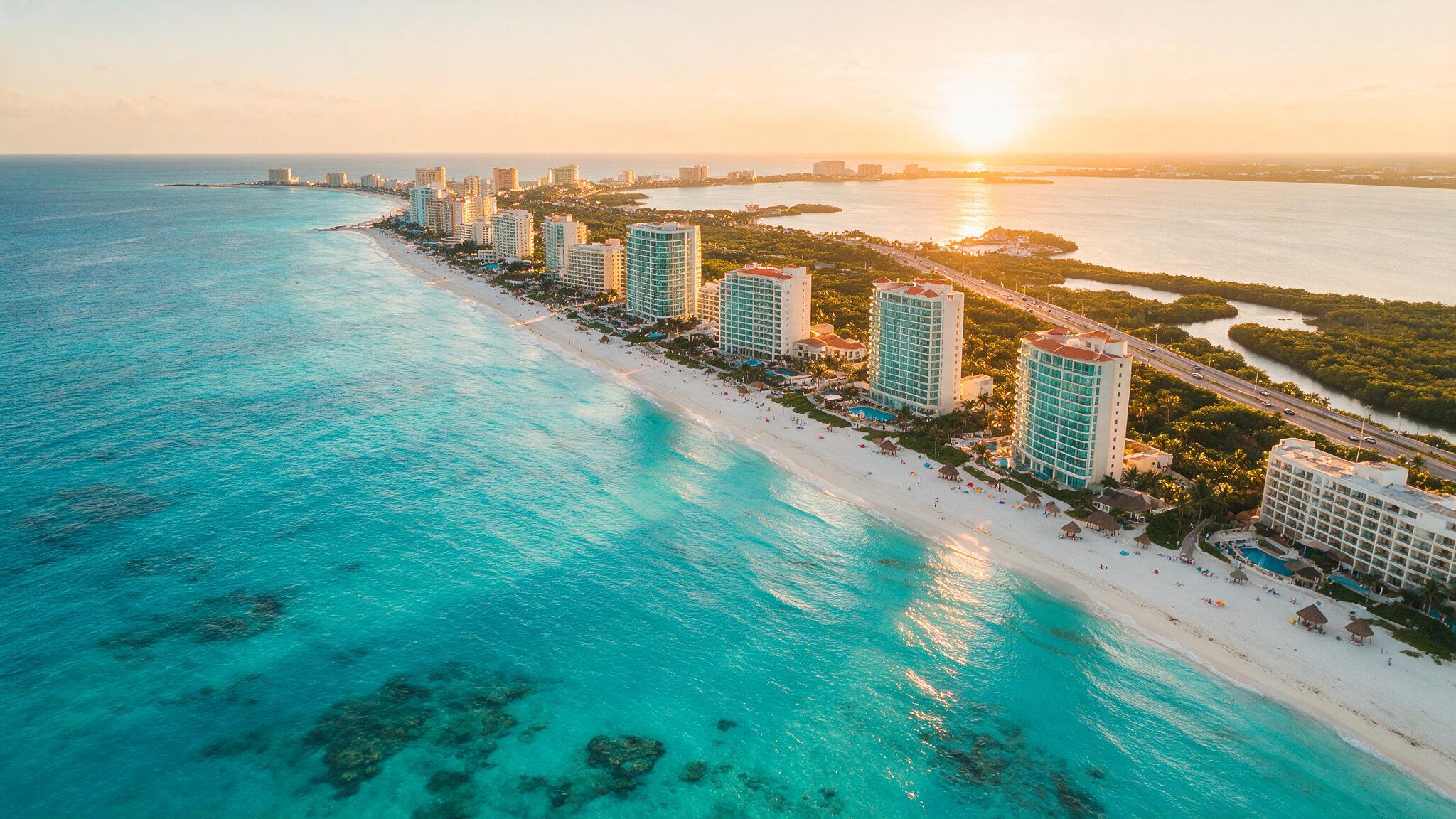
Incentive Travel in Cancún and the Riviera Maya: A Planning Guide for US Sales Teams
Cancún is the default answer for US incentive programs — which is exactly why it needs to be chosen deliberately. Air access, venue types, seasonality, budget drivers and the errors that quietly ruin programs.
By Beat Meetings · Mexico City
Cancún is the most common answer to "where should we take the sales team," and being the common answer is both its strength and its trap. The strength is real: nowhere else in Mexico combines this much air access, this much room inventory and this much event infrastructure. The trap is that qualifiers may have been there already — on holiday, with their family — and an incentive that feels familiar loses part of its pull.
This guide covers what actually decides whether a Cancún program works.
Why it wins on access
Cancún International (CUN) is among the busiest airports in Latin America and carries direct service from a very large number of US cities — across the Northeast, Southeast, Texas, the Midwest and the West Coast. For a distributed sales force, that matters more than any other single factor.
The practical consequence: you can bring a nationally dispersed team into one place on one day without routing half of them through a connection. Fewer connections means fewer missed arrivals, fewer stranded qualifiers and a shorter transfer window on day one.
It also lowers travel risk, which — as we cover in our guide to safety and duty of care for corporate groups in Mexico — is a real component of a defensible program decision.
Cancún, Riviera Maya, Playa del Carmen and Tulum are not the same decision
People use these interchangeably in a brief and then discover the difference on site. The corridor runs roughly 130 kilometres south from the airport.
- Cancún Hotel Zone — shortest transfer, largest convention infrastructure, most walkable nightlife. Best for larger groups and programs with a heavy meeting component.
- Riviera Maya (Playa Mujeres, Puerto Morelos, Playa del Carmen) — longer transfer, more resort privacy, better for full-buyout programs where the property is the experience.
- Tulum — strongest design and social-media appeal, smallest and most fragmented event infrastructure, longest transfer. Excellent for small senior groups, difficult for 200 people with a general session.
The rule that saves programs: transfer time is program time. A 90-minute each-way transfer on a four-night program costs you an entire evening of usable experience, and it does it twice.
Seasonality is a budget decision, not a weather decision
Rate pressure in this corridor is severe and predictable:
- December through April — peak. Highest rates, tightest availability, best weather. Book 9–12 months out or accept what is left.
- May, and September through November — the value windows. Materially lower rates with acceptable conditions. September and October carry hurricane-season exposure that must be addressed contractually.
- July–August — hot and humid, family-travel demand keeps rates high. Rarely the best value.
If your qualification window ends in Q4 and the trip runs in Q1, you are booking into peak. Build that into the per-person budget from the start rather than discovering it during sourcing.
Hurricane season is a contract question
The Atlantic hurricane season runs June through November, with the highest probability of disruption typically in September and October. This is not a reason to avoid those months — the savings are significant and direct impact on any given week is unlikely — but it is a reason to be deliberate.
What a properly structured program does:
- Negotiate force majeure and rebooking terms before signing, while you still have leverage
- Confirm the property's own storm protocol in writing
- Take event cancellation insurance if the program value justifies it
- Identify the contingency destination during sourcing, not during the crisis
What actually drives the per-person number
Against the 2026 benchmark of $5,100 per person globally and roughly $5,400 in North America (IRF 2026 Trends Report), the variables that move a Cancún budget most are, in order:
- Season — the single largest lever, capable of moving room cost by a wide margin
- All-inclusive versus European plan — all-inclusive simplifies budgeting and eliminates on-site friction, but restricts venue and culinary differentiation
- Off-property experiences — a private cenote dinner or a Chichén Itzá or Tulum ruins excursion is what qualifiers actually recount afterwards, and it is the line most often cut first
- Production — if there is an awards night, this decides whether it feels like a milestone or a hotel banquet
- Air — whether the company buys tickets or reimburses changes the number substantially
Our full breakdown of what gets cut first when budgets tighten is in the 2026 incentive travel cost analysis.
The three mistakes we see most often
1. Choosing the property before defining the program. The resort is not the experience; the itinerary is. Groups that pick a hotel first end up designing the program around the hotel's constraints instead of around the behaviour they wanted to reward.
2. Underestimating the transfer. Covered above, and consistently the most expensive unforced error in this corridor.
3. Treating an all-inclusive as a delivered program. All-inclusive covers food and beverage. It does not cover the awards production, the off-property experience, the transfer choreography or the on-site coordination — and those are the four things that make qualifiers feel rewarded rather than merely accommodated.
Frequently asked questions
How far in advance should we book an incentive trip to Cancún?
For the December–April peak, 9–12 months out. For the May and September–November value windows, 6–9 months is usually workable. Large groups needing contiguous room blocks and a dedicated general session space should always book at the longer end.
Is Cancún or the Riviera Maya better for a corporate group?
Cancún's Hotel Zone offers the shortest transfers and the largest convention infrastructure, making it stronger for bigger groups with a meeting component. The Riviera Maya offers more privacy and better full-buyout options, at the cost of a longer transfer that consumes usable program time.
What is the best time of year for an incentive trip to Cancún?
December through April gives the best weather at the highest cost. May and September through November offer materially better rates, with September and October carrying hurricane-season exposure that should be handled through force majeure terms and a pre-identified contingency destination.
Should we book an all-inclusive resort for a sales incentive trip?
All-inclusive simplifies budgeting and removes on-site friction, which is genuinely valuable. But it covers food and beverage only — not awards production, off-property experiences, transfer choreography or on-site coordination, which are the elements qualifiers actually remember.
Plan it with a team that has never cancelled an event
Beat Meetings has delivered 500+ corporate events across Mexico, Latin America and Europe in 20+ years — with zero cancellations. We handle strategy, creative, in-house AV production and end-to-end logistics, so your team shows up and performs instead of chasing vendors.
Tell us about your event and get a custom proposal within 24 hours.